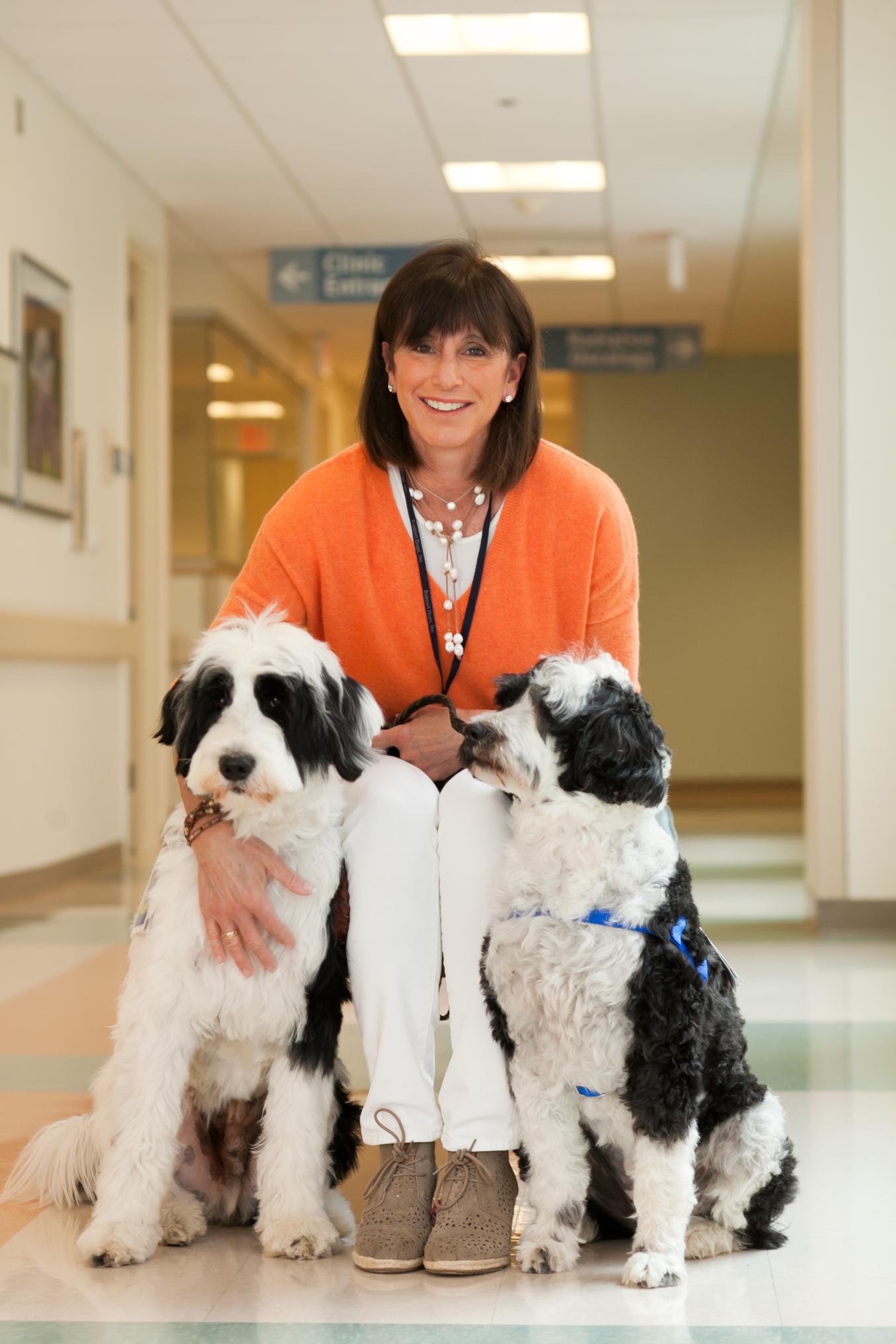
 For dedicated volunteer Debbie, the journey into therapy dog work began with a very special partner—Sookie, her first Duo dog. Together, they set the foundation for something meaningful, launching a partnership with Duo Touch Therapy at Missouri Baptist Medical Center in 2011. In those early days, Debbie and Sookie were the only team at MoBap. A small start launched with a clear mission to bring comfort, connection, and compassion to patients and staff alike.
Today, that mission has grown far beyond its humble beginnings. What started with one team has grown to 15 touch therapy teams at MoBap and more than 300 touch therapy teams across the St. Louis metro area, reaching countless individuals in need of emotional support. At MoBap alone, Debbie has brought the program to life alongside seven beloved dogs—Sookie, Charlie, Georgie, Pippa, Opie, Perry, and Frankie—with new teammates like Lanie currently in training.
Every Tuesday, you’ll find Debbie and one of her touch dogs in the Infusion Center, moving from the waiting room to individual treatment areas. Their approach doesn’t change: “Would you like to pet our dogs?” About 80% of patients say yes—and from there, something special happens. Patients light up, share stories about their own pets, and express deep gratitude. Staff members, too, look forward to these visits, often knowing the dogs by name.
Beyond the smiles, the impact of therapy dogs is deeply rooted in science. Interaction with therapy dogs is proven to reduce cortisol levels, helping to lower stress, anxiety, and physical tension. For patients navigating illness, uncertainty, or trauma, these visits offer a calming, grounding presence that can ease emotional strain and provide a moment of relief during difficult days.
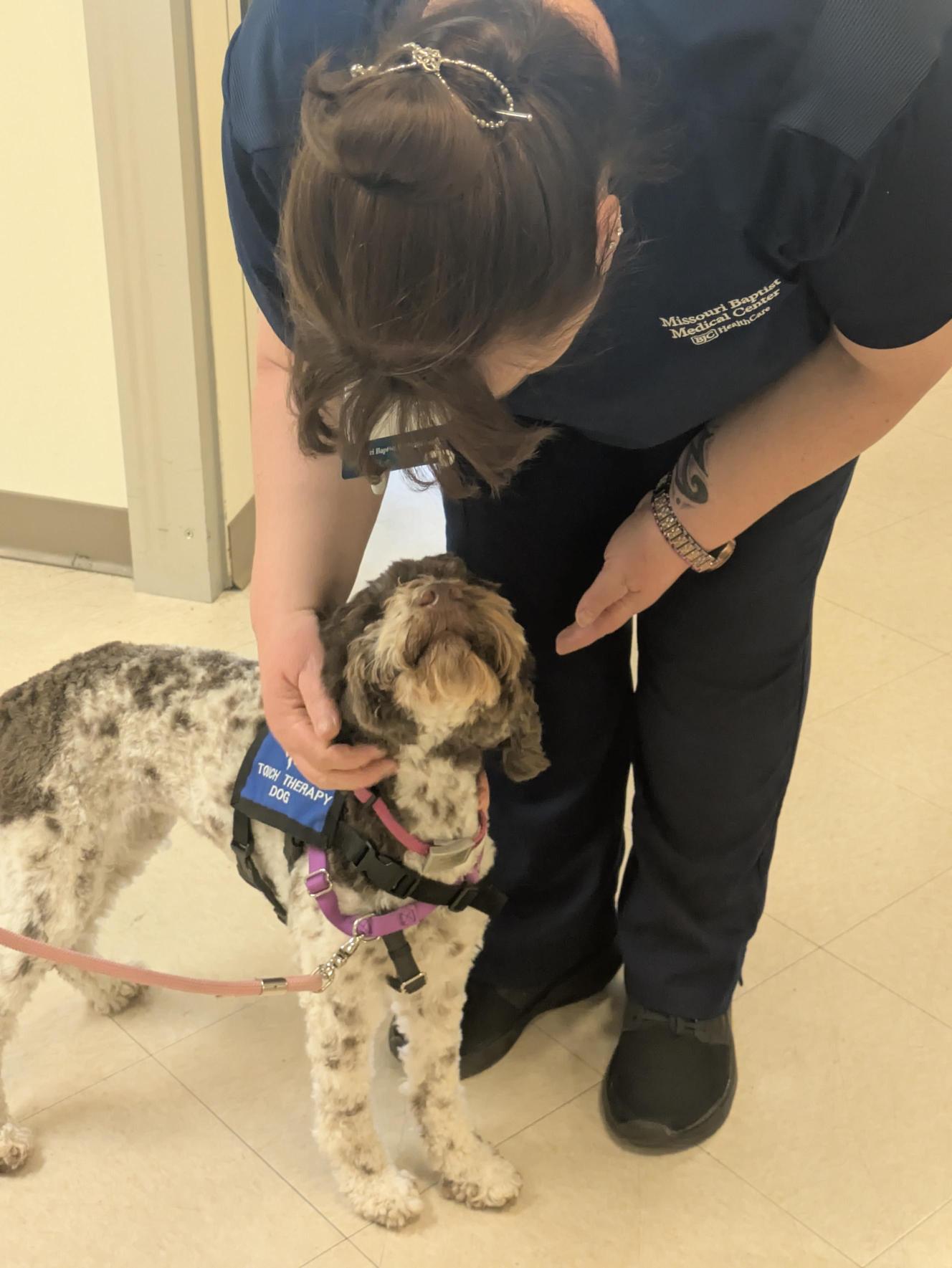 That impact extends to health care workers as well. Nurses, physicians, and clinical teams—especially those in high-intensity environments—often carry significant emotional fatigue. Therapy dogs offer a brief but powerful reset, providing comfort, lifting spirits, and helping reduce the stress that comes with caring for others.
“I’m just holding the leash,” the Debbie says, humbly. “The dog does all the work.”
But the impact is undeniable.
One unforgettable moment occurred with a patient near the end of their life who was without family present but had a lifelong love of dogs. During a visit, Charlie—typically not a “kisser”—approached the patient, who reached out his hand. In that moment, Charlie gently gave him kisses, offering comfort in a way words never could.
“Charlie knew exactly what to do,” Debbie recalls. 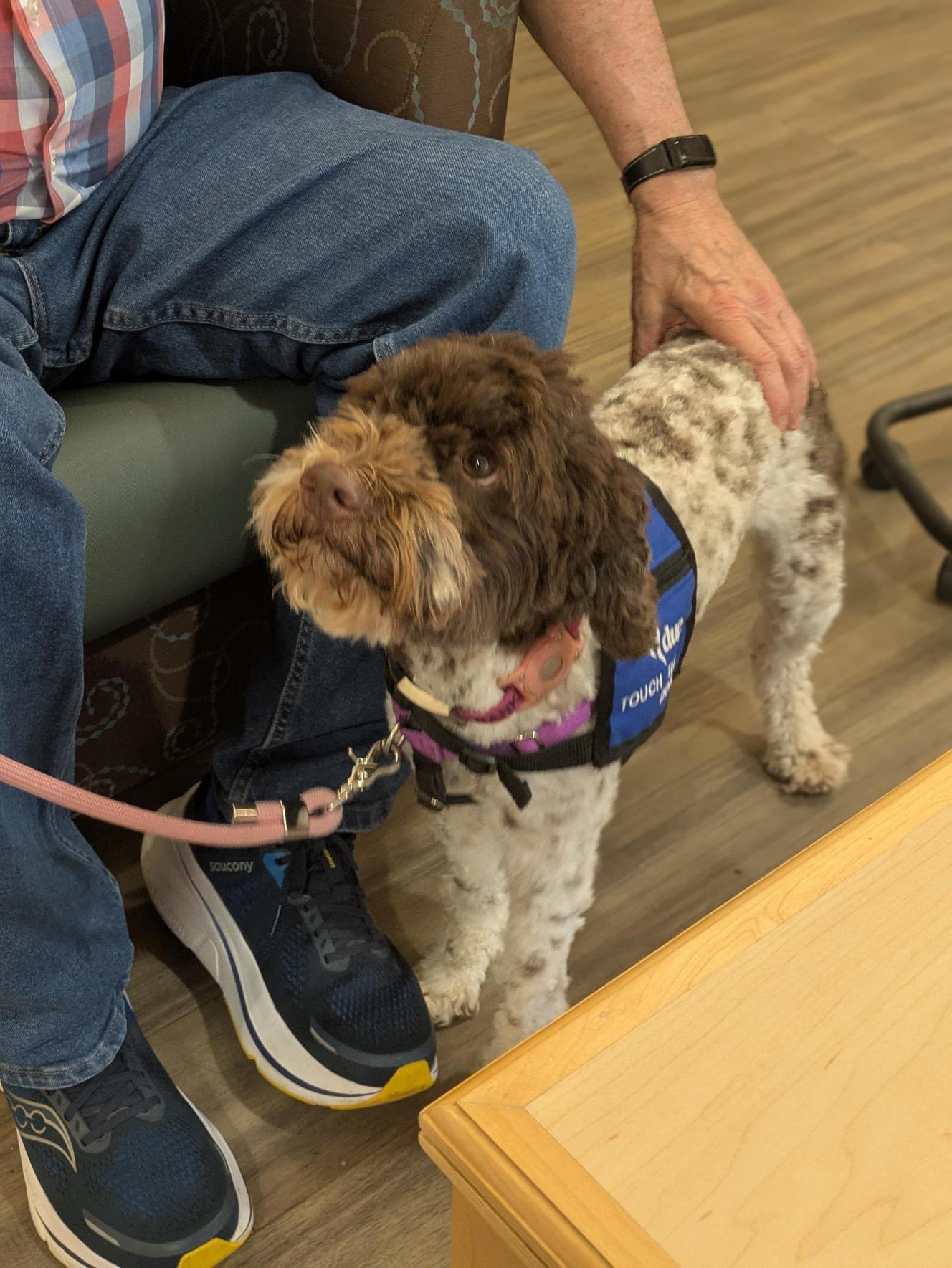
For Debbie, these moments of connection are what continue to inspire service. Seeing joy on patients’ faces, feeling the appreciation from staff, and knowing that even brief interactions can bring relief and peace—that’s what makes it all worthwhile.
For those considering volunteering, Debbie’s advice is heartfelt and practical. Start early, commit to training, and ensure your dog is well-socialized and obedient. Therapy work takes time and dedication, but the reward—sharing your dog’s comfort with people who truly need it—is immeasurable. And, Debbie notes, Barb and the entire MoBap team make the experience welcoming and deeply fulfilling.
Looking ahead, there’s hope to continue the program’s expansion, bringing therapy dogs to more floors and more patients throughout the hospital. Because sometimes, healing doesn’t come from medicine alone—it comes from a gentle presence, a wagging tail, and a moment of connection when it’s needed most.